
Keynotes

Christian S. Jensen
Keynote 1

Christian S. Jensen

Aalborg University, Denmark

08:50–09:50Grand Ballroom

Time Series Analytics – Benchmarking and Beyond

Abstract

Due in part to the widespread deployment of connected sensing devices, increasingly massive volumes of time-series data are being produced. The amount of Internet-of-Things data, much of which is time series data, is projected to reach 170+ zettabytes in 2026, being produced by 20+ billion devices. This data captures the states of diverse and important processes at an unprecedented level of detail, in turn enabling us to better understand and improve those processes. When harnessed properly, time series data thus holds the potential to enable tremendous value creation across numerous sectors.

This talk characterizes the setting of time series and characterizes selected key challenges that many existing time series analysis methods aim to address. It then presents ongoing benchmarking efforts, aiming to accelerate progress in time series machine learning by enabling easy, comprehensive, and fair comparisons of existing and new time series analysis methods. It ends by speculating on the role of benchmarking in agentic time series analytics.

Biography

Christian S. Jensen is Professor of Computer Science at Aalborg University, Denmark. His research concerns data management and analytics, including machine learning, data mining, and query processing, with a focus on temporal and spatio-temporal data. Christian is an ACM and IEEE Fellow, and he is a member of Academia Europaea, the Royal Danish Academy of Sciences and Letters, and the Danish Academy of Technical Sciences. He has received several awards, most recently the 2022 ACM SIGMOD Contributions Award and the 2019 IEEE TCDE Impact Award. He is on the board of Villum Fonden, a major funder of research in Denmark and is vice-chair of the Danish National Research Foundation. In Norway, he chairs the scientific advisory board (SAB) of the Norwegian Research Center for AI Innovation. He recently completed terms as president of the steering committee of the Swiss National Research Program on Big Data and as a member of the SAB of the Max Planck Institute for Informatics.

My T. Thai
Keynote 2

My T. Thai

University of Florida, USA

08:50–09:50Grand Ballroom

Mining Intelligence: The Next Frontier of Data Mining

Abstract

For decades, data mining has focused on discovering hidden structure in data. Foundation models now present us with a new object of discovery. They transform vast amounts of data into internal representations and computational mechanisms that support prediction, generation, and reasoning. In this keynote, I will argue that foundation models should not only be tools for mining data; they should themselves become objects of data mining. Drawing on our recent work on critical neurons, functional groups, hierarchical representations, and computational circuits, I will illustrate how we can begin to discover the organizing principles of learned intelligence. These developments also suggest intriguing connections to ideas from network science, including structure, interaction, influence, and dynamics.

Biography

My T. Thai is the Nelms Endowed Chair Professor of Computer and Information Science and Engineering and Associate Director of the Warren B. Nelms Institute for the Connected World at the University of Florida. An IEEE Fellow, her research spans trustworthy AI, optimization, and network science, with a particular focus on understanding, optimizing, and securing complex intelligent systems. Thai has made influential contributions to network vulnerability, information dynamics, explainable AI, privacy-preserving learning, and large-scale optimization. Her work on the mathematical modeling of misinformation propagation was recognized with the 2023 ACM Web Science Trust Test-of-Time Award, while her research exposing security and privacy vulnerabilities in explainable AI received the 2023 AAAI Distinguished Paper Award.

She has authored or edited 9 books and more than 350 publications and has received honors including the IEEE Big Data Security Women of Achievement Award, the NSF CAREER Award, the DTRA Young Investigator Award, and multiple best-paper awards. She currently serves as Editor-in-Chief of ACM Computing Surveys, one of the field’s most influential journals.

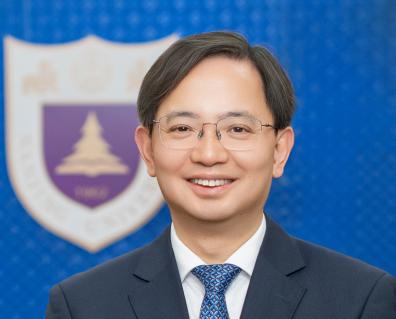
Zhi-Hua Zhou
Keynote 3

Zhi-Hua Zhou

Nanjing University, China

08:50–09:50Grand Ballroom

Learnware and AI Model Management System

Abstract

The transition from file storage to database management systems transformed stored data into managed resources. AI now faces an analogous transition from AI model storage to AI model management. Existing model pools essentially serve as AI model storage systems. What is needed instead are AI model management systems that enable models trained by different developers, for different tasks, with different data, and under different objectives to be identified, reused, and even assembled to address future user tasks. Because AI model developers are generally unwilling to share their training data, such systems should operate without accessing the training data of model developers and, ideally, without accessing raw data of future users. This requirement poses a fundamental challenge: the functionality of a modern AI model may not be fully understood even by the developer who trained it. How, then, can a system identify which models are useful for a given user task, let alone assemble models developed independently for different purposes? At first glance, this objective may appear unattainable. It becomes possible, however, by upgrading the basic unit of management from a machine learning model to a learnware. Learnware = Model + Specification. The specification, whose assignment transforms a trained model into a learnware, is generated with help of a machine learning process without disclosing the training data of the developer and has a theoretically established data-preservation property. The Learnware Dock System (LDS) provides a path toward powerful AI model management systems.

Biography

Zhi-Hua Zhou is Professor of Computer Science and Artificial Intelligence, Vice President of Nanjing University. His research interests are mainly in artificial intelligence, machine learning and data mining, with significant contributions to ensemble learning, multi-label and weakly supervised learning, etc. He has authored the books "Ensemble Methods: Foundations and Algorithms", "Machine Learning", etc., and published more than 200 papers in top-tier journals or conferences, with more than 120,000 citations according to Google Scholar. Many of his inventions have been successfully deployed in industry. He is/was President of IJCAI Trustee, Executive Committee member of SIGKDD, Series Editor of Springer Lecture Notes in Artificial Intelligence, Editor-in-Chief of Frontiers of Computer Science, and advisory board member of AI Magazine. He founded ACML (Asian Conference on Machine Learning), and chaired many conferences including Program Chair for ICDM, AAAI, IJCAI, General Chair for ICDM, SDM, etc. He is a Fellow of the ACM, AAAI, AAAS, IEEE, and member of the Chinese Academy of Sciences and Academia Europaea.