Tutorials

Main Day 1 · Friday, November 13

Tutorial 1
10:10–12:10Grand Ballroom 1

Overview

Graphs are the fabric of spatial intelligence, multi-agent system and biological structures, showing fundamental importance in the era of large models. The rise of foundation models has motivated Graph Foundation Models (GFMs), yet current methods often struggle with structural heterogeneity, transferability, and interpretability. This tutorial introduces the advances in GFMs. We start from the roles of graphs in the era of large models, and then provide a unified geometric perspective. Furthermore, we introduce Geometric Morphology Learning and Sheaf Networks for learning graphs and structures. Participants will leave with a coherent view of how graph and geometry empower artificial general intelligence.

Program

TimeTopicPresenter
10:10–10:30On the Next-Generation Structural IntelligencePhilip S. Yu
10:30–11:00Graph Foundation ModelLi Sun
11:00–11:30Geometric Morphology Learning TheoryLi Sun
11:30–11:50Graph Learning Applications in the Era of Large ModelsChuan Shi
11:50–12:10Sheaf Network Theory and ApplicationsPietro Liò

Speakers

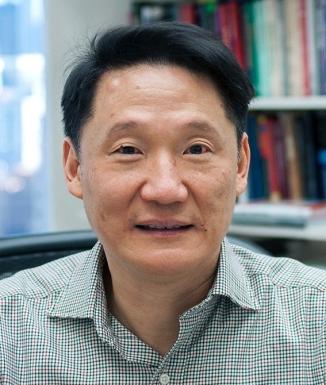
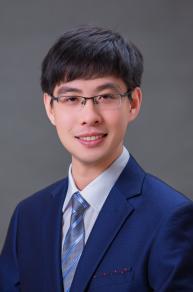
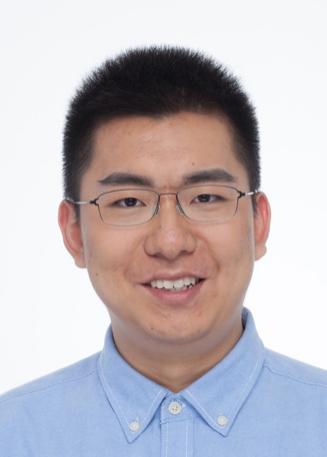
Philip S. Yu
Philip S. Yu

Distinguished Professor

University of Illinois Chicago

Research interests: Foundation Models, Graph Deep Learning, Big Data Analysis
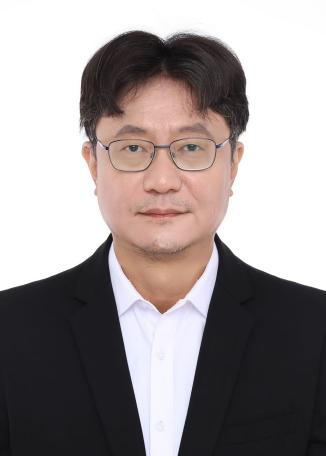
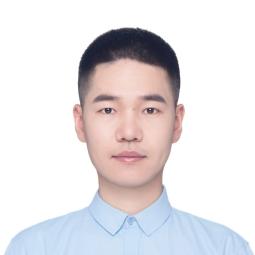
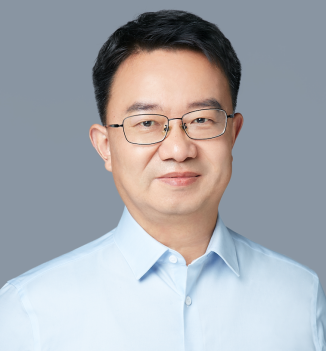
Li Sun
Li Sun

Associate Professor

Beijing University of Posts and Telecommunications

Research interests: Foundation Models, Graph Deep Learning, Riemannian Geometry
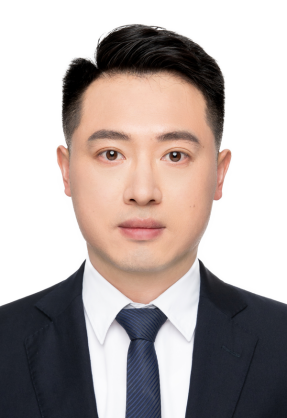
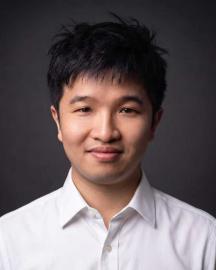
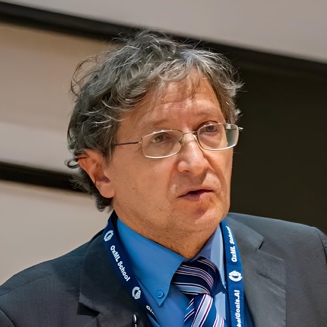
Chuan Shi
Chuan Shi

Full Professor

Beijing University of Posts and Telecommunications

Research interests: Foundation Models, Graph Deep Learning
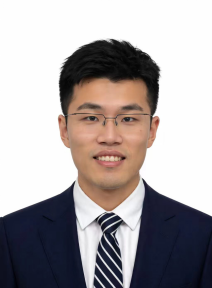
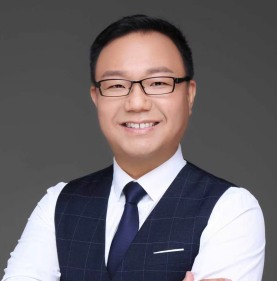
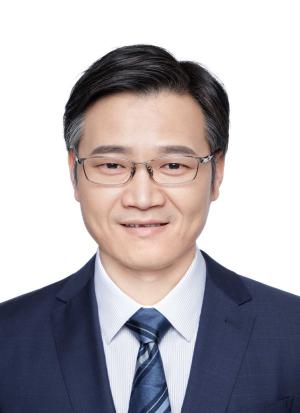
Pietro Liò
Pietro Liò

Full Professor

University of Cambridge

Research interests: Graph Deep Learning, Riemannian Geometry
Tutorial 2
10:10–12:10Grand Ballroom 2

Overview

High-quality data is essential for data mining and machine learning, yet manual and rule-based management cannot effectively address complex anomalies. AI-powered high quality data management overcomes these limitations by applying machine learning, deep learning, and large language models to enable autonomous adaptation and contextual understanding. This tutorial reviews AI-driven advances in three technologies for creating and maintaining high-quality datasets: data discovery, data preparation, and data integration. It presents case studies involving relational, graph, and spatio-temporal data. By connecting methodologies with applications, the tutorial equips researchers and practitioners with tools for intelligent data management and encourages interdisciplinary research in data-centric AI.

Program

TimeTopicPresenter
10:10–10:15From Raw Data to Reliable Intelligence: The Role of AI-Powered Data ManagementYunjun Gao
10:15–10:45Efficient Data Discovery with Heterogeneous Indexes and Modern HardwareYifan Zhu
10:45–11:15Automatic Data Preparation in the Age of AICongcong Ge
11:15–11:40Intelligent Data Integration: From Schemas to EntitiesQing Liu
11:40–12:10Advanced Graph-driven Data ManagementYing Zhang

Speakers

Yunjun Gao
Yunjun Gao

Qiushi Distinguished Professor

Zhejiang University

Research interests: Multi-modal Data Management and Analysis, Data Quality, Spatial and Spatio-Temporal Databases, AI Interaction with DB Technology, Big Graph Data Management and Mining, and Data Privacy.

Ying Zhang
Ying Zhang

Professor

Zhejiang Gongshang University

Research interests: Large scale graph data management and analytics, Spatial database, AI4DB, DB4AI

Qing Liu
Qing Liu

ZJU100 Young Professor

Zhejiang University

Research interests: Graph Data Management, Big Data, Database

Yifan Zhu
Yifan Zhu

Researcher

Zhejiang University

Research interests: Multi-modal Data Management and Analysis, Vector Database, Hardware Acceleration

Congcong Ge
Congcong Ge

Researcher

Zhejiang University

Research interests: Data Preparation, Data Quality, Data Integration

Main Day 2 · Saturday, November 14

Tutorial 3
10:10–12:10Grand Ballroom 1

Overview

LLMs have demonstrated remarkable performance on different reasoning tasks because of their superior capabilities in natural language understanding, but still struggle with complex tasks such as multi-hop reasoning and long-context reasoning. In this tutorial, we will introduce the state-of-the-art advances in neuro-symbolic reasoning with LLM and KG. The main topics cover neuro-symbolic logical reasoning, KG foundation model, and applications in interdisciplinary science. The technical details will be showcased, and the open challenges are also summarized.

Program

TimeTopicPresenter
10:10–10:25Overview of Knowledge Graph and Large Language Model for Neuro-Symbolic ReasoningHaofen Wang
10:25–11:00Neuro-Symbolic Logical Reasoning with Large Language ModelTianxing Wu
11:00–11:35Knowledge Graph Foundation Models for Neuro-Symbolic ReasoningZequn Sun
11:35–12:10Neuro-Symbolic Reasoning for Interdisciplinary ScienceMeng Wang

Speakers

Tianxing Wu
Tianxing Wu

Associate Professor

Southeast University, China

Research interests: Knowledge Graph, Large Language Model, Medical AI

Zequn Sun
Zequn Sun

Assistant Professor

Nanjing University, China

Research interests: Knowledge Graphs; Knowledge-Enhanced Large Language Models

Meng Wang
Meng Wang

Associate Professor

Tongji University, China

Research interests: Multimodal Knowledge Graphs

Haofen Wang
Haofen Wang

Professor

Tongji University, China

Research interests: Knowledge Graphs, Retrieval-Augmented Generation, Memory Engineering

Tutorial 4
10:10–12:10Grand Ballroom 2

Overview

Graphs underpin data science, from social platforms and knowledge bases to financial systems and AI-driven applications. As graph data becomes larger, more dynamic, more sensitive, and integrated with large language models, graph computation must evolve beyond isolated algorithms or learning models. This tutorial begins with an introduction to modern graph computation and then examines four complementary themes: scalable graph query processing, privacy-preserving graph analytics, graph-based financial security, and LLM-assisted graph reasoning. By connecting algorithmic foundations with requirements for privacy, robustness, scalability, and verifiability, it provides a coherent understanding of modern graph computation for the data mining and machine learning community.

Program

TimeTopicPresenter
10:10–10:25Introduction to Modern Graph ComputationWenjie Zhang
10:25–11:00Graph Query ProcessingQingshuai Feng
11:00–11:25Trustworthy Graph AnalyticsYizhang He
11:25–11:50Graph for Financial SecurityDawei Cheng
11:50–12:10LLMs for Graph ComputationKai Wang

Speakers

Wenjie Zhang
Wenjie Zhang

Professor

School of Computer Science and Engineering, UNSW Sydney

Research interests: Large-scale data management; data-centric AI

Qingshuai Feng
Qingshuai Feng

Assistant Researcher

School of Advanced Engineering, Great Bay University

Research interests: Graph query processing; graph algorithms

Yizhang He
Yizhang He

Associate Professor

Global College, Shanghai Jiao Tong University

Research interests: Trustworthy graph computation

Dawei Cheng
Dawei Cheng

Associate Professor

School of Computer Science and Technology, Tongji University

Research interests: Big data in finance; graph learning

Kai Wang
Kai Wang

Associate Professor

Antai College of Economics and Management, Shanghai Jiao Tong University

Research interests: Graph data mining; LLMs for graph computation

Main Day 3 · Sunday, November 15

Tutorial 5
10:10–12:10Grand Ballroom 1

Overview

Large language models (LLMs) are transforming relational data processing in two synergistic directions: as operator-level primitives—LLM-Enhanced Relational Operators (LROs)—and as the reasoning core of intelligent data agents that orchestrate these operators end-to-end. This tutorial provides a comprehensive 2.5-hour introduction spanning two complementary perspectives: (1) the operator perspective—a formal LRO taxonomy, multi-LRO system architectures, optimization techniques, and benchmark methodology; and (2) the agent perspective—how LROs serve as building blocks within data agents, featuring structured context management, layered skill orchestration, and self-evolving evaluation frameworks. We bridge these perspectives through a unified view of LLM–database co-design, covering both foundational theory and practical system implementations.

Program

TimeTopicPresenter
10:10–10:30Introduction and BackgroundRong Zhu
10:30–11:10LLM-Enhanced Relational OperatorYunxiang Su
11:10–11:50Data AgentTianjing Zeng
11:50–12:10Summary and Future WorkRong Zhu

Speakers

Rong Zhu
Rong Zhu

Research Scientist

Alibaba Group

Research interests: Data and LLM

Tianjing Zeng
Tianjing Zeng

Research Scientist

Alibaba Group

Research interests: Data and LLM

Yunxiang Su
Yunxiang Su

Research Scientist

Alibaba Group

Research interests: Data and LLM

Tutorial 6
10:10–12:10Grand Ballroom 2

Overview

This tutorial explores advances in context-aware time series forecasting with large language models, moving beyond historical pattern recognition toward context-grounded cognitive reasoning. It explains why real-world forecasts depend not only on temporal patterns, but also on external environments, events, domain knowledge, and system states. The tutorial introduces three generations of context intelligence: multimodal semantic understanding, slow-thinking reasoning over predictive evidence, and agentic interaction with tools and environments. It shows how these capabilities support interpretation, reasoning, and information acquisition, with representative applications in electricity load forecasting, renewable power generation, traffic, industry, and scientific forecasting, while highlighting open challenges and future directions.

Program

TimeTopicPresenter
10:10–10:25Introduction & Motivation: From Pattern Recognition to Context-Grounded Cognitive ReasoningMingyue Cheng
10:25–10:55Multimodal Semantic Understanding of Heterogeneous ContextMingyue Cheng
10:55–11:25Slow-Thinking Cognitive Reasoning over Predictive EvidenceXiaoyu Tao
11:25–11:55Agentic Autonomous Interaction with Tools and EnvironmentsHao Miao
11:55–12:10Real-World Applications, Open Problems & Future DirectionsHao Miao

Speakers

Mingyue Cheng
Mingyue Cheng

Associate Researcher

State Key Laboratory of Cognitive Intelligence, University of Science and Technology of China

Research interests: LLMs and Agentic AI; Time Series Intelligence; Scientific Knowledge Cognition

Xiaoyu Tao
Xiaoyu Tao

Ph.D. Student

State Key Laboratory of Cognitive Intelligence, University of Science and Technology of China

Research interests: Time Series Analysis; LLMs and Agent

Hao Miao
Hao Miao

Assistant Professor

The Hong Kong Polytechnic University, Hong Kong

Research interests: Time Series Analysis; Agentic AI